Most couples and event planners book a photo booth the same way they pick a salad at a buffet: scan the options, pick the one that looks decent, move on. It's an "extra," a fun add-on, a line item near the bottom of the budget. And ninety percent of the time, that approach works out fine.
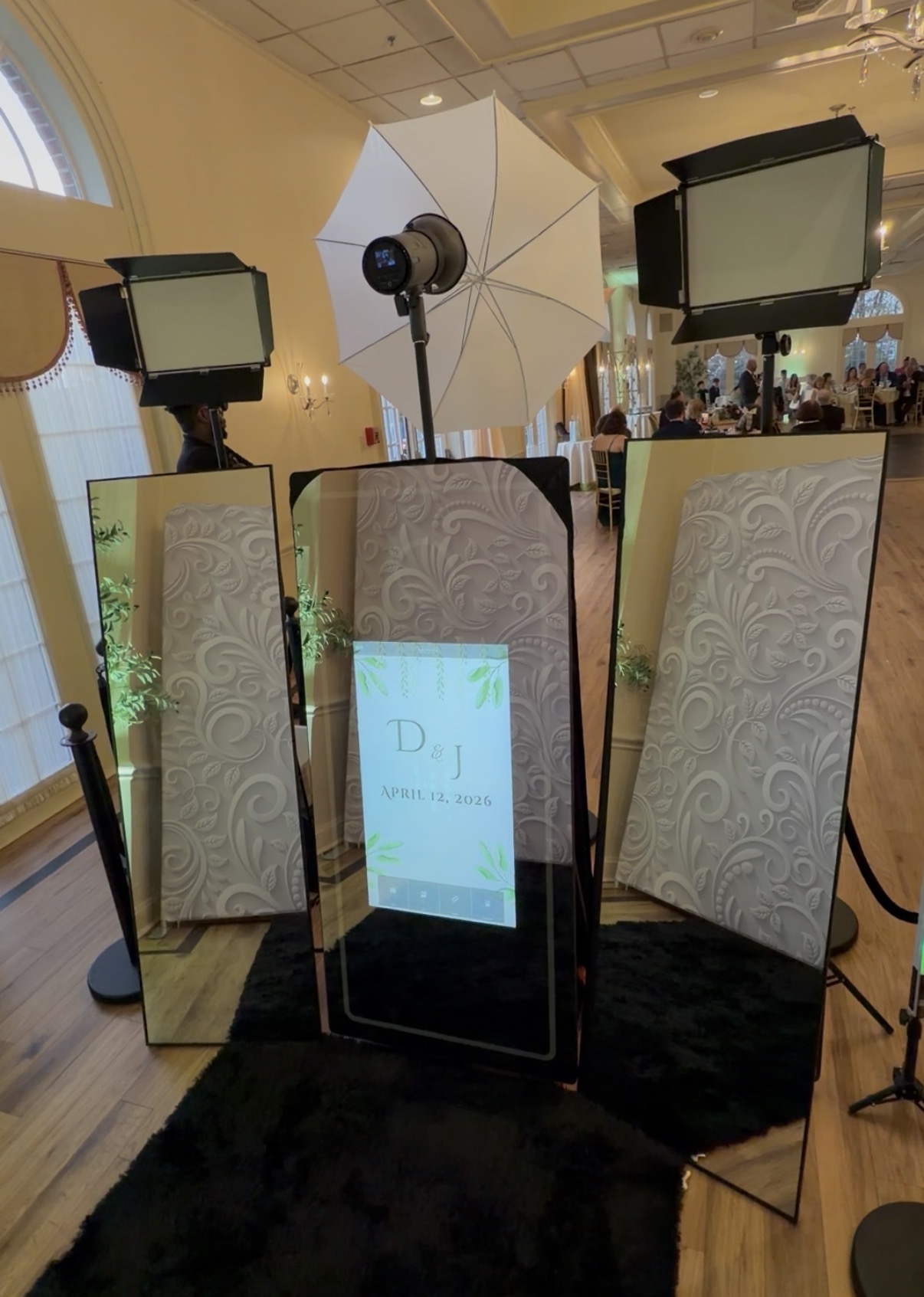
But the other ten percent is where things go sideways.
I've been in this industry long enough to have heard every version of the same call. The booth showed up an hour late. The attendant kept disappearing. The prints came out blurry. The "luxury" booth was a folding tripod with a ring light. They asked for an extra $200 in cash on-site for "setup." By the time those couples realize they made the wrong choice, it's their wedding day. There is no do-over.
So before you sign anything, here's how to actually evaluate a photo booth company — not based on whose Instagram looks the prettiest, but based on the things that determine whether your event runs smoothly or becomes the story your guests retell at brunch.
Why this decision matters more than most couples realize
A photo booth isn't an entertainment add-on the way a chocolate fountain is. It sits in a high-traffic part of your floor plan for two to four hours, interacts with nearly every guest at your event, and produces a physical or digital keepsake people walk away holding. If it works well, it becomes one of the most-photographed, most-talked-about features of the night. If it fails, it fails publicly — and the failure is captured, ironically, in the absence of any photos to remember it by.
Beyond the experience itself, a photo booth vendor is operating professional equipment in your venue alongside your caterer, your DJ, and your planner. They need to be the kind of business your venue trusts, your insurance policy recognizes, and your timeline can rely on. A cheap, sloppy vendor isn't just a bad booth — they're a liability that can affect your entire event.
The four things that actually matter (and the things that don't)
Most "how to choose" articles list ten or fifteen factors, weighted equally. In reality, four things separate the companies you can trust from the ones you can't.
1. Insurance, registration, and contract
This is the single fastest filter. A legitimate photo booth company is a legitimate business — it has general liability insurance (usually $1M minimum, sometimes $2M for larger venues), it can provide a Certificate of Insurance naming your venue as additionally insured, and it operates under a real signed contract with clear terms.
Ask for proof of insurance before you book. Any reputable company will send a COI within a business day. Any company that hesitates, deflects, or claims they "don't need it for residential events" is a company you should walk away from. Many high-end venues — country clubs in Cherry Hill, hotels in Philadelphia, museums in NYC, corporate spaces in Princeton — won't even let a vendor load in without a COI on file.
The contract matters just as much. It should specify the exact package, the on-site hours, the setup and teardown windows, the cancellation policy, the deposit terms, and the date of service. If a vendor wants you to pay by Venmo with no contract, that's not a vendor. That's a freelancer hoping nothing goes wrong.
2. Equipment quality you can actually see
Photo booth equipment ranges from genuinely professional (DSLR cameras, calibrated studio lighting, dye-sublimation printers that produce instant lab-quality 2x6 strips) to consumer-grade (iPad on a stick, ring light from Amazon, inkjet that smudges before the print dries). Both look fine in marketing photos. Only one looks fine in real life.
A few ways to tell the difference without being a photographer yourself: ask what camera and printer the company uses. Pro companies will name brands and models without hesitating — Canon DSLRs, DNP RX1 printers, Mitsubishi CP-K60DW-S, etc. Ask to see sample prints, not just digital photos. Hold one in your hand. The paper weight, color accuracy, and finish tell you everything. Ask about backup equipment — what happens if a camera fails mid-event? Real companies have a second of everything in the vehicle. Hobbyists have a prayer.
For specialty booths (360, mirror, AI, glam) the equipment gap is even wider. A real 360 booth has a smooth motorized rotation, stabilized footage, and an editing pipeline that delivers polished videos to guests' phones within minutes. A budget knock-off has a wobbly arm, jerky footage, and a "we'll email it next week" promise that never quite happens.
3. The attendant (the most overlooked factor)
Here's the secret most couples don't know until they've worked an event: the attendant matters more than the booth. A skilled attendant fills the line when traffic is slow, keeps it moving when it isn't, troubleshoots the printer in 30 seconds when a paper jam hits, encourages your shy uncle to actually step in, and produces a guest experience that feels effortless from the outside.
A bad attendant — or worse, no attendant — turns a $500 booth into a $50 photo printer surrounded by confused guests who can't get the props to work.
When you're evaluating companies, ask about their attendant policies. Is one always on-site? Is the attendant a trained team member or a contracted day-of helper hired off Craigslist? How are they dressed (real companies have a dress code that matches the event's formality)? How long have they been with the company? At a wedding, the attendant is part of your event staff — they should look and behave like it.
4. What's actually included (and what's hidden)
The most common complaint I hear from couples about previous booth experiences isn't equipment — it's surprises. Surprise travel fees. Surprise setup charges. Surprise "premium prop" upcharges. Surprise overtime rates. A company that quotes $400 and bills $700 is technically delivering what they promised. They just buried the rest in the small print.
When you're comparing quotes, normalize them. For each company, ask:
- How many hours of active service does this include?
- Is travel included, or billed separately based on distance?
- Is there an idle time charge between setup and service?
- Are props included, or rented separately?
- Is the digital gallery included, or is that an upcharge?
- Are reprints during the event unlimited, or capped?
- What's the overtime rate if you want to extend on-site?
- Is staffing included for the full duration, or only for "active" hours?
Two quotes that look $200 apart on paper can be $800 apart in reality once you adjust for what's actually being delivered. The lowest number is almost never the lowest price.
The reviews, references, and real track record
Reviews are easy to fake. So is a polished website. The companies you want to hire are the ones who can pass two specific tests.
First, the volume and recency test. A company with 47 reviews on Google over four years is more trustworthy than a company with 200 reviews that all appear within a three-month window. Look at how reviews are spaced out over time. Look at how the company responds to negative reviews — not whether they have any (everyone does), but whether the responses sound human, accountable, and professional.
Second, the venue test. Ask the company which venues they've worked at in the past six months. A real company will rattle off a list. Then check those venues' preferred-vendor lists if available — or simply call the venue's event coordinator and ask if they've worked with the company. Venue coordinators are the most honest source of vendor information in the entire wedding industry, because they have nothing to gain by being polite. (For weddings at popular venues across Morristown, Jersey City, or Hoboken, the coordinator usually knows every photo booth company in the region by name.)
Red flags that should end the conversation
Some signs are subtle. These aren't.
If a vendor asks you to pay the full balance up-front before the event, walk away. Industry standard is a retainer (usually 25–50%) at booking and the remainder one to two weeks before the event.
If a vendor can't or won't put their pricing in writing, walk away. "We'll discuss it on the call" is not pricing transparency.
If a vendor's portfolio is heavily filtered, heavily stylized, or shows zero candid guest photos (only posed shots), be cautious. You're looking at marketing assets, not actual event work.
If a vendor responds slowly during the booking phase — when they should be at their most attentive — that's a preview of how responsive they'll be on the day of your event.
If a vendor offers a price that's significantly below the market range, ask yourself why. The economics of running a real photo booth business — insurance, equipment depreciation, fair wages for trained attendants, professional consumables — don't bend below a certain floor. A $250 wedding booth either includes none of those things, or it isn't actually showing up.
The questions to ask before you book
Once you've narrowed your shortlist to two or three companies, run them through this script:
- How long have you been operating, and how many events do you typically work in a year?
- How far in advance do you need our final logo, template, and color choices?
- What does setup look like in a venue like ours — load-in time, footprint, power requirements?
- What's your backup plan if a piece of equipment fails on-site?
- Who specifically will be our attendant, and can I have their name in advance?
- What happens if our event runs long — what's the overtime rate and how do you handle it on-site?
- How and when do we receive the digital gallery?
- What does your contract's cancellation and rescheduling policy look like?
A confident, transparent company answers every one of those questions without flinching. A vendor who deflects on more than two of them is telling you what your event will feel like.
The "luxury" question — what actually separates premium from budget
A lot of companies market themselves as "luxury." Most aren't. Luxury isn't the price tag, the gold lettering on the menu, or a few extra props. It's a different operating standard from front to back.
Real luxury vendors have a dedicated attendant in formal attire who never leaves the booth. They use professional studio lighting, not consumer ring lights. Their prints are dye-sublimation, lab-quality, and dry to the touch the moment they emerge. They offer custom-designed templates created for your event specifically, not stock layouts with your name pasted in. They arrive 90 to 120 minutes before service begins, not fifteen. They carry backup equipment for every primary piece. They communicate proactively in the week leading up to the event without being chased. They leave the venue cleaner than they found it.
You don't need a luxury photo booth at every event. A backyard birthday party doesn't need lab-quality 2x6 strips. But for weddings, milestone celebrations, corporate galas, and brand activations — events where the production value is part of the message — the gap between premium and budget is visible, and it's visible to your guests.
A simple framework for your shortlist
When you're down to your final two or three options, score each one on a one-to-five scale across four categories: equipment quality, attendant professionalism, transparency of pricing and contract, and responsiveness during the booking process. Whoever scores highest is the right choice, regardless of which one is cheapest. The price difference between the best company on your list and the second-best is almost always a few hundred dollars. The quality difference, on the day of the event, is the entire memory.
If you're planning an event in New Jersey, Pennsylvania, or New York City and want to talk through which photo booth experience would fit your event best, I'd love to chat. You can reach me directly at ashley@traore360.com or request a quote at traore360.com.
— Ashley Traore, MS
Co-Owner, Traore Entertainments